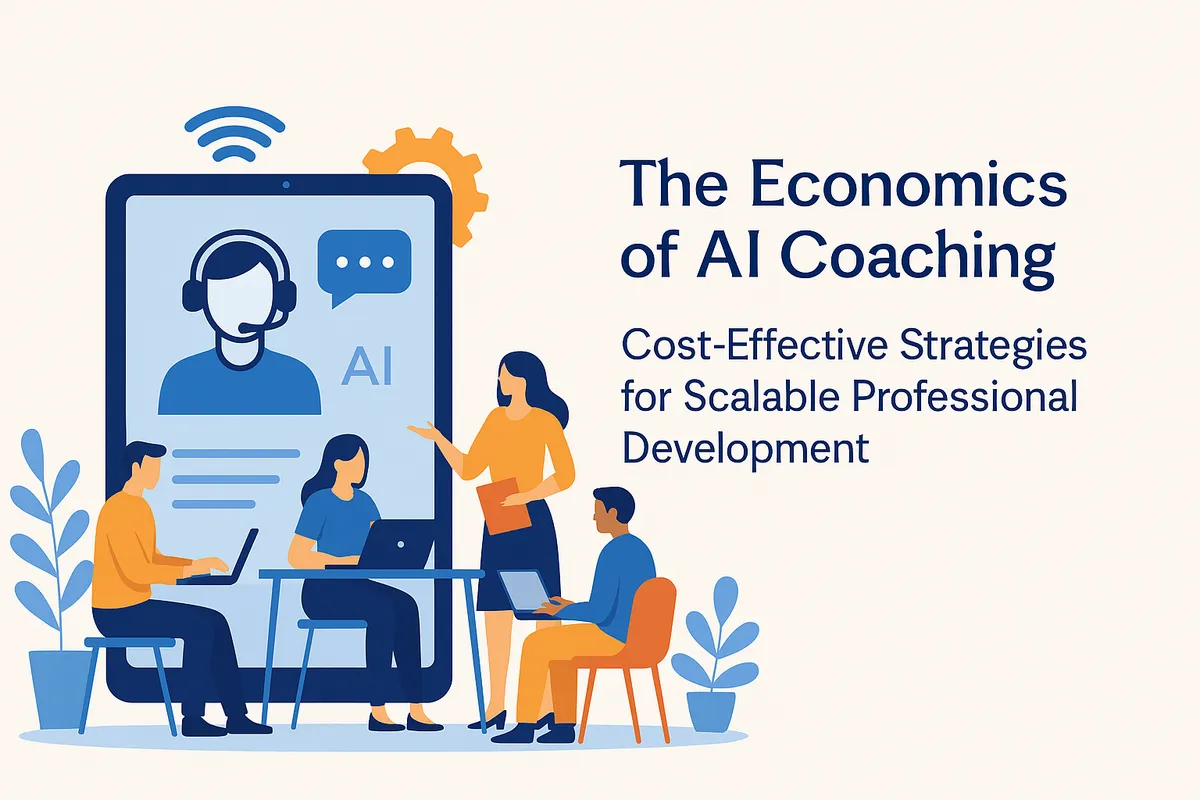
The Economics of AI Coaching: Cost-Effective Strategies for Scalable Professional Development

The Economics of AI Coaching: Cost-Effective Strategies for Scalable Professional Development

  • Admin
  • AI
  • 10 Apr, 2025

What was once buzzword is now a mandate.

AI is setting the bar for employees, as evidenced in the Shopify memo telling employees that they’ll have to show jobs can’t be done by artificial intelligence before asking for more headcount and resources. What’s more, organizations are also under increasing pressure to deliver personalized professional development for employees. Traditional coaching, while effective, often comes with significant financial and logistical challenges. Enter AI-powered coaching: a transformative solution that not only democratizes access to high-quality development but also offers measurable cost savings and scalability.

As budgets tighten and the demand for upskilling grows, AI coaching is emerging as a key player in the economics of employee development. Let’s explore how businesses can leverage AI coaching to drive growth, reduce costs, and support talent at scale.


Why Traditional Coaching Models Fall Short

Executive coaching and one-on-one mentoring have long been staples of professional development, particularly for high-potential employees and senior leaders. While impactful, these programs are also:

  • Expensive: Coaching engagements can cost between $200 and $500 per hour, with executive coaching programs often running into tens of thousands of dollars per participant annually.
  • Inaccessible: Only a small percentage of employees—typically top-tier performers or executives—benefit from traditional coaching due to limited availability and budget constraints.
  • Unscalable: The logistics of providing personalized coaching to large or distributed teams are cumbersome and often unfeasible.

This model may work for small cohorts, but it doesn’t align with the needs of modern organizations striving for equitable and continuous learning at all levels.


The Rise of AI-Powered Coaching

AI coaching bridges the gap between quality and scale by delivering timely, personalized feedback and development tools directly to employees—no scheduling required. Leveraging natural language processing, machine learning, and behavioral science (psychometrics), AI coaches can provide:

  • Real-time feedback
  • Personalized learning paths
  • Data-driven insights into individual and team behaviors
  • Nudges to reinforce soft skills and leadership growth

According to a 2023 McKinsey report on AI in the workplace, companies adopting AI-enabled tools for talent development are 2.3 times more likely to report productivity gains and cost savings source.


The Financial Case for AI Coaching

1. Lower Cost per Employee

One of the most compelling benefits of AI coaching is its affordability. Unlike human coaching, where costs increase linearly with each new participant, AI platforms typically operate on a subscription or per-seat basis—dramatically lowering the cost per user.

For example, a company might spend $10,000 annually to coach a single executive with a human coach. That same budget could support AI coaching for hundreds of employees, delivering personalized development at a fraction of the cost.

2. Scalable Across Teams and Geographies

AI tools are inherently scalable. Whether you’re onboarding 50 new hires or rolling out a leadership development program across five continents, AI coaching platforms can deliver consistent and personalized support without logistical complexity.

This scalability is especially crucial for organizations embracing hybrid and remote work, where real-time, self-guided development tools are essential to maintaining engagement and performance.

3. Continuous and On-Demand Support

Traditional coaching is episodic—often tied to monthly or quarterly sessions. AI coaching is always on. It provides nudges, feedback, and insights exactly when employees need them, leading to faster behavior change and better retention of skills.

Research from BetterUp found that consistent, in-the-moment coaching increased employee engagement by 22% and reduced attrition by 30% source.

4. Actionable Data and ROI Insights

AI platforms generate rich, anonymized data that helps organizations understand behavior trends, skills gaps, and coaching effectiveness. This allows L&D leaders to tie coaching outcomes to business metrics like performance, retention, and engagement—something that’s notoriously difficult with traditional coaching.

With platforms like Humantelligence, organizations can benchmark team dynamics, measure progress over time, and adapt learning strategies based on real-time analytics.


Making AI Coaching Work for Your Organization

Here are key considerations if you’re looking to maximize the ROI of AI coaching:

1. Align with Business Objectives

Start by identifying the specific outcomes you want to drive—such as improving manager effectiveness, boosting cross-functional collaboration, or accelerating leadership readiness. The more aligned your AI coaching solution is with business goals, the clearer the value proposition.

2. Integrate with Existing Tools and Workflows

Adoption increases when AI coaching is integrated seamlessly into daily routines. Look for platforms that work within your existing tech stack—such as Slack, Microsoft Teams, or your LMS—so employees can receive insights in the flow of work.

3. Prioritize Personalization

A one-size-fits-all approach won’t move the needle. Choose solutions that tailor insights and nudges based on individual personality, communication style, and role. The more relevant the feedback, the higher the engagement.

4. Ensure Data Ethics and Transparency

AI tools should be transparent about how they collect and use data. Employees must trust that the coaching they receive is private, secure, and beneficial. Look for vendors with clear data governance policies and a strong track record of responsible AI use.


The Future Is Scalable, Equitable Coaching

As workforce expectations evolve and the pressure to retain talent intensifies, scalable coaching is no longer optional—it’s essential. AI-powered coaching solutions deliver on the promise of cost-effective, high-impact development that reaches every corner of your organization.

At Humantelligence, we believe in empowering every employee with the insights they need to grow. Our AI-powered behavioral science platform helps companies build more agile, self-aware, and collaborative teams—while keeping professional development affordable and measurable.


Key Takeaways

  • Traditional coaching might be effective but it’s hard to measure, expensive, and limited in scale.
  • AI coaching reduces the cost per employee while delivering personalized, real-time support.
  • Scalable, data-driven, and integrated into daily workflows, AI coaching can align directly with business goals.
  • Organizations embracing AI coaching see improved engagement, performance, and ROI.

Interested in transforming your workplace with scalable, AI-powered coaching? Learn more about our AI coach and discover how to make coaching and employee development more impactful — and accessible — than ever before.

Tags :
Share :

Related Posts

AI to Enhance Humans...Not Replace Them at Work

Emotional intelligence at work has become a cornerstone for effective professional interactions in modern society. As workplaces become more complex and diverse, the ability to understand and manage emotions—both one’s own and those of others—has become essential for fostering productive and integrated work environments. The World Economic Forum's "Future of Jobs Survey" highlights that by 2025, emotional intelligence will be one of the top skills required in business, highlighting its growing importance in the professional sphere.  Despite its recognized value, developing and applying emotional intelligence at work present numerous challenges. Traditional training methods, which are often costly and difficult to scale, fail to provide the practical, real-time application necessary for true skill acquisition. Of the employees who received traditional training, 43% considered it ineffective. Furthermore, identifying and recruiting talent with high emotional intelligence is a complex process, often relying on subjective measures and lengthy evaluation periods.  Enter artificial intelligence (AI). By leveraging AI technologies, organizations can improve emotional intelligence in the workplace and overcome potential hurdles by offering scalable, personalized, and effective solutions.  How Can AI Help Individuals Develop Emotional Intelligence? AI technologies can play a pivotal role in overcoming the challenges associated with developing and applying emotional intelligence in the workplace. At Humantelligence, I've seen firsthand how AI-powered assessments can scan entire companies and enhance collaboration. By analyzing communication patterns in meetings and written interactions (both offline and virtual), these tools provide real-time, personalized feedback on how to improve emotional interactions. Employees then receive insights on how to adapt their communication to better suit their audience's preferences and motivations, ensuring more effective and empathetic exchanges.  In our own workplace, we use AI tools to rewrite communication at the push of a button, tailoring messages to the emotional preferences of the recipients. This feature enhances day-to-day interactions and fosters a more emotionally intelligent workplace culture. In meetings, our AI engine scans the dynamics and provides the emotional intelligence insights needed to improve productivity and collaboration. This proactive approach integrates emotional intelligence into everyday workflows, rather than letting it be a neglected aspect of professional development.  We also address the challenge of scalability in emotional intelligence training. While traditional training methods are often focused on a small percentage of leaders and managers, all employees receive personalized training up to 20 times a month, equating to 240 interactions a year. This consistent use makes the training more impactful and transformational across the organization.  During recruitment, we utilize advanced psychometric evaluations and behavioral analysis to assess candidates' emotional competencies. This approach allows us to identify high emotional intelligence candidates early in the hiring process, leading to better team dynamics and performance.   3 Best Practices to Integrate AI with Emotional Intelligence Training for Improved Professional Interactions  Integrating AI with emotional intelligence training can significantly enhance professional interactions and workplace dynamics. The following are just a few of the best practices we've learned while integrating AI across our organization and navigating the challenges that arose along the way.   1. Look for Personalized Learning Opportunities Seventy-five percent of Fortune 500 companies use emotional intelligence training, and for good reason. These AI tools can analyze individual learning styles and preferences to deliver tailored training programs that meet the specific needs of each employee. At Humantelligence, we've seen how AI tools can adapt training content with a click of a button to meet the needs of each user. For example, if an employee struggles with a particular aspect of emotional intelligence, AI can provide additional resources and exercises to address that specific area.  An effective AI-driven platform should provide personalized insights and training modules that help employees develop their emotional intelligence skills in a way that is most effective for them. This approach ensures that employees are more engaged and can apply what they learn sooner rather than later.  2. Implement Real-Time Feedback Mechanisms Real-time feedback is crucial for the practical application of emotional intelligence skills. AI technologies can provide immediate insights and suggestions based on an employee's interactions and communications. In fact, Gallup data show that when employees receive meaningful feedback within the last week, they’re almost four times more likely to be engaged.   To meet this need at Humantelligence, we implemented a tool that offers real-time feedback on email communications and meeting dynamics. These real-time insights are surfaced within an employee’s workflow, which helps them adjust their behavior and improve their emotional intelligence in the moment. This continuous feedback loop is essential for reinforcing learning and promoting ongoing development.  3. Integrate Emotional Intelligence Training into Daily Workflows Emotional intelligence training should be seamlessly integrated into the daily workflows of your employees. In our daily workflows, we use AI tools that can be embedded into existing work processes, such as communication platforms and meeting tools. This integration makes it easier for employees to access and apply their training in real-world scenarios.  For those who struggle with soft skills, AI-driven training insights can also be an essential resource for enhanced productivity and job satisfaction. According to research from IDC, organizations stand to benefit up to $1 trillion in productivity gains worldwide over the next two years by implementing skills development powered by generative AI and automation. AI can significantly improve collaboration among teams by providing real-time insights into their communications, helping them work better and faster together. This ensures that emotional intelligence training is not an isolated event but a continuous part of their everyday interactions.  As emotional intelligence becomes increasingly important in the workplace, leveraging AI to provide scalable, personalized, and real-time training can address many of the challenges associated with traditional emotional intelligence development methods. By adopting best practices for integrating AI and emotional intelligence, organizations can foster a more emotionally intelligent workforce, leading to better communication, stronger teamwork, and improved overall performance.

Unlocking the Power of Generative AI to Transform HR

In an era marked by digital transformation and remote work, Human Resources (HR) professionals face an evolving landscape. The challenges of recruiting top talent, maintaining effective communication, and optimizing productivity have never been more critical for the employee experience. Fortunately, generative Artificial Intelligence (AI) is emerging as a transformative force in HR, offering innovative solutions to address these issues. In this article, we'll explore the power of generative AI to transform HR by reshaping practices, improving recruitment processes, enhancing communication, and boosting productivity in distributed workforces. Revolutionizing Recruitment with Generative AI Recruitment has always been a cornerstone of HR, but the process can be time-consuming and fraught with biases. Generative AI, through its natural language processing and machine learning capabilities, is revolutionizing how organizations identify and attract top talent. Here are some key ways in which generative AI is reshaping recruitment: 1. Automated Candidate Screening Generative AI-powered tools can analyze thousands of resumes and job applications within seconds, ensuring that every candidate is evaluated fairly. These systems can identify relevant qualifications, skills, and experience, streamlining the initial screening process. According to a survey conducted by HR Dive, 72% of HR professionals reported that AI has improved their ability to find the right candidates more efficiently. 2. Eliminating Bias in Hiring One of the most significant challenges in HR is reducing unconscious bias during hiring. Generative AI algorithms are designed to make decisions based solely on data, reducing the risk of discrimination based on gender, race, or other factors. It promotes diversity and inclusivity in the workplace. 3. Personalized Candidate Experiences Generative AI can personalize candidate interactions, making potential employees feel valued from the beginning. Chatbots and AI-driven email responses can answer candidate queries promptly, enhancing the overall candidate experience. You can even make these responses sound more human than the traditional chatbot. Juan Betancourt, CEO of Humantelligence and well-known executive search recruiter notes, "Generative AI is a game changer for HR. The power of generative AI to transform HR will show itself in saved time and also an improvement in the quality of candidates screened. It will make the recruitment process is more efficient and inclusive than ever before." Generative AI to Transform HR in the Delivery of Communication Across Distributed Teams Effective communication is the glue that holds remote teams together. Generative AI is playing a pivotal role in bridging communication gaps and fostering collaboration. Here's how: 1. Virtual Assistants for HR Queries Generative AI-powered virtual assistants can handle routine HR inquiries from employees, such as leave requests, policy clarifications, and benefits queries. This not only frees up HR professionals from administrative tasks but also ensures quick and consistent responses. According to a study by Deloitte, companies that use virtual HR assistants have seen a 50% reduction in HR query resolution time. 2. Multilingual Support In a global workforce, language barriers might hinder effective communication and create inefficiencies. Generative AI can provide real-time translation services, allowing team members from different regions to collaborate seamlessly. 3. AI-Powered Chat and Collaboration Tools AI-driven chat and collaboration tools can analyze conversations and suggest relevant documents, resources, or experts, facilitating information exchange among team members. This enhances productivity and ensures that the right information is always at hand. This also works for email communication and communication in virtual meetings among colleagues. For example, HR can provide employees with an AI plug in to their email provider so that emails can be rewritten and optimized for how the recipient likes to receive information. One simply writes an email and then pushes a button. The email gets rewritten instantly using AI and then tells you why that person prefers this type of communication. "It's important for the employee experience to create a more supportive and engaging environment for people to develop and thrive. AI-driven insights that help people work together better have the power to reduce turnover and boost team productivity, while keeping team cultures/dynamics positioned for the future. It’s an investment that keeps paying dividends across the employee lifecycle,” said Betancourt.  In fact, a McKinsey report found that organizations that effectively leverage AI for internal communications and collaboration are 2.5 times more likely to be top performers. Boosting Productivity Through AI-Powered Insights Improving productivity is a constant goal for HR professionals. Generative AI is providing new insights and tools to help organizations streamline processes and maximize efficiency. 1. Predictive Analytics for Workforce Management Generative AI can analyze historical data and predict future workforce needs. This enables HR to plan for staffing levels, skill gaps, and training requirements, ensuring that the organization remains agile in responding to changing demands. IBM's Watson is a prime example of an AI system that offers predictive analytics for HR. 2. Automating Routine HR Tasks Administrative tasks, such as payroll processing and benefits enrollment, can be automated using generative AI. This not only reduces the risk of errors but also frees HR professionals to focus on strategic initiatives. 3. Employee Feedback and Sentiment Analysis Generative AI can analyze employee feedback, surveys, and sentiment data to gauge employee satisfaction and identify potential issues. This proactive approach enables HR to address concerns before they escalate. HR can now focus on strategic initiatives while the AI takes care of routine tasks.  Employees also appreciate the quick and accurate responses they receive. Challenges and Ethical Considerations Using Generative AI to Transform HR While generative AI offers numerous benefits, it's essential to acknowledge and address potential challenges and ethical concerns. These include data privacy, algorithmic bias, and the need for ongoing human oversight. HR professionals must ensure that AI is used responsibly and in line with legal and ethical standards. As technology continues to advance, HR departments that embrace generative AI will be better equipped to meet the demands of the modern workforce and drive their organizations toward success in an increasingly digital and remote world. For now, this is just the tip of the iceberg when it comes to the power of generative AI to transform HR. If leveraged right, it can enable organizations to recruit top talent, enhance communication, and boost productivity among distributed workforces. By automating tasks, reducing bias, and providing valuable insights, AI is transforming HR practices and helping companies thrive in a digital and remote world. However, it's crucial to address ethical considerations and ensure responsible AI use to maximize its benefits. As technology continues to evolve, HR professionals who embrace generative AI will be at the forefront of shaping the future of work. If you're interested in learning how Humantelligence's AI-powered psychometric tool can improve the employee experience, let's talk!

Using AI in the Workplace to Make Work Feel More Human

The fusion of artificial intelligence (AI) within the fabric of our workplace's daily operations is reshaping not only how we work but how we connect with each other. While technology might seem like a cold mechanism, AI holds the potential to enhance the human touch in the workplace, creating more dynamic, engaging, and personalized experiences for employees. By integrating AI, the complex layers of human interactions and emotional intelligence can be amplified, offering a more human-centric approach to work -- AI that makes work more human. Overview of AI in the Workplace In the digital age, AI serves as a pivotal tool in transforming how organizations operate, particularly in recruitment, communication, and productivity enhancement. Whether it's automating mundane tasks, analyzing employee feedback, or facilitating cross-functional collaboration, AI efficiently addresses some of the workforce's most pressing needs. By utilizing AI's predictive capabilities and real-time analytics, companies can optimize workflows, ensuring that employees are both content and productive in a seamlessly integrated digital environment. The Importance of the Human Touch Human interaction in the workplace is crucial, as it fosters a sense of connection, empathy, and shared purpose. The nuances of human emotions and interpersonal relationships play a significant role in team dynamics and individual performance. AI should not be seen as a replacement for this essential human element. Instead, it can serve as a bridge, enabling deeper insights into team dynamics and facilitating environments where trust, empathy, and effective communication flourish. Ultimately, AI can help nurture a more emotionally intelligent workforce by providing personalized recommendations and insights that enhance the way we understand and respond to each other. AI's Role in Learning and Development Adapting to New Skills and Training Methods The workplace is experiencing a seismic shift with the growing reliance on remote and hybrid work models. This has accelerated the need for new learning and development (L&D) strategies. Traditional training methods, such as one-time workshops or external consultants, no longer meet the dynamic needs of today's workforce. Companies are transitioning to digital platforms that can provide on-demand, flexible learning experiences, which better support the way employees learn today. These platforms allow for the integration of reskilling and upskilling into daily workflows, fostering continuous professional growth. Personalized Learning via AI Personalized learning has emerged as a key component of effective L&D programs. AI-driven platforms can tailor educational content to individual career aspirations and learning styles, empowering employees to take ownership of their development journey. These platforms can provide adaptive learning paths, helping individuals focus on specific skills they need to advance in their roles. This approach not only enhances engagement but also aligns with today’s workforce that desires personal and professional growth opportunities. The Impact on Employee Retention A well-crafted L&D program significantly impacts employee retention. Research shows that employees are far more likely to stay with a company if they see clear paths for advancement and skill development. Companies that offer comprehensive training have witnessed higher income per employee and greater overall performance. Therefore, investing in personalized, AI-enhanced learning solutions can be a strategic advantage in retaining top talent and reducing turnover costs. Enhancing Communication and Collaboration with AI Bridging Gaps in Remote and Hybrid Work Setups The advent of remote work has posed challenges for maintaining effective communication and collaboration within teams. AI has the potential to bridge these gaps by facilitating seamless communication across different locations and times. AI-driven tools can manage virtual team interactions, ensuring that communication remains consistent and effective. They provide insights into team dynamics, enabling smoother transitions and interactions among distributed team members. Utilizing AI to Improve Emotional Intelligence AI technology can assist in enhancing emotional intelligence within teams by analyzing communication patterns and providing feedback. These insights help employees tailor their interactions to better suit their colleagues’ emotional and motivational preferences, fostering understanding and empathy. This capability is particularly beneficial in remote settings, where misunderstandings can easily occur due to the lack of non-verbal cues. Tools for Real-Time Communication Insights Modern AI-powered tools can deliver real-time insights during meetings and collaborative sessions. These tools analyze discussions, suggest relevant documents, and provide conversational prompts, thus improving the quality and outcome of communications. Additionally, AI can offer real-time translation services in global teams, ensuring language barriers do not impede collaboration. By integrating these tools into daily workflows, organizations enhance productivity and enable more meaningful interactions among team members. By leveraging AI in these areas, organizations can create a more human-centered work environment, fostering growth, better communication, and deeper connections among employees. This not only improves individual performance but also propels companies towards achieving higher overall objectives. Creating a Feedback-Driven Culture Fostering an environment where employees feel heard and valued has become more pertinent than ever. Modern workplaces demand an adaptive feedback culture that progresses beyond traditional annual performance reviews. AI’s Role in Continuous Feedback Mechanisms Artificial intelligence introduces a transformative approach to feedback in the workplace. By leveraging AI-driven platforms, organizations can seamlessly integrate feedback into daily workflows. AI tools can facilitate continuous feedback loops through employee engagement suites that incorporate psychometrics to enhance understanding. These platforms can provide insights into employees' work behaviors, motivators, and energizers, allowing managers to tailor feedback more effectively. Automated feedback reminders and real-time coaching tips can also encourage a culture of continuous improvement. This not only aids in addressing issues promptly but also in reinforcing positive behaviors, ultimately leading to enhanced employee satisfaction and retention. Building a Supportive and Inclusive Workplace AI also plays a crucial role in nurturing a supportive work environment by providing data-driven insights into team dynamics. AI tools can identify trends and patterns in employee behavior and sentiment, offering insights into workplace inclusivity and team cohesion. These insights empower HR professionals to make informed decisions on diversity and inclusion initiatives, ensuring that every team member feels valued and included. By promoting open communication and understanding, AI can help to dismantle existing barriers, fostering a more cohesive and inclusive work environment. Benefits of AI in Team Dynamics Harnessing AI’s potential in team settings can vastly improve how teams interact, collaborate, and perform in the workplace. Improving Team Collaboration with AI Insights Artificial intelligence can significantly enhance collaboration by analyzing communication patterns and providing insights into areas of improvement. AI tools assist teams by highlighting collaboration bottlenecks and facilitating more effective communication strategies. For instance, AI can recommend optimal communication practices tailored to individual team members based on their preferred communication styles. By understanding these nuances, teams can reduce miscommunication and enhance collective problem-solving capabilities. Enhancing Team Performance Metrics AI offers dynamic analytics capabilities that track and predict team performance metrics. These tools enable managers to pinpoint specific areas that require development and provide real-time feedback to align efforts with organizational goals. By utilizing predictive analytics, AI can forecast potential team challenges and suggest proactive measures, thus maintaining consistent team performance. Furthermore, AI's ability to personalize learning paths ensures that team members acquire the skills necessary to overcome challenges and contribute more meaningfully to team objectives. Overall, the integration of AI in the workplace is not about replacing human interaction but enhancing it. By promoting continuous feedback, supporting inclusive environments, and optimizing team dynamics, AI enriches the human touch at work, creating a more connected and humanized workforce. Final Thoughts Embracing AI tools in the workplace represents more than just technological advancement; it signifies a bridge to a more human-centric work environment. By enhancing emotional intelligence and offering personalized learning experiences, AI contributes significantly to fostering a culture of inclusion and connection. It's crucial for organizations to leverage AI not only as a tool for efficiency but as a means to enhance the human touch and impart genuine connection in daily interactions. This dual focus ensures that as we scale operations, we also nurture the vital human elements that drive engagement and productivity, ultimately creating workplaces where people feel valued, understood, and integral to their team's success.

When AI Meets Management: A More Efficient Way to Coach Your Managers

With organizations streamlining operations and reducing managerial layers, the demand for effective manager development solutions has never been more critical. What’s more, a December 2022 Gartner survey of more than 6,000 individual contributors and managers revealed that managers are twice as likely to report an increase in responsibilities versus individual contributors, compared to before the pandemic. For example, 35% of managers say they have more direct reports and 49% report that the complexity of their responsibilities has increased. Enter generative AI for managers, a transformative technology poised to revolutionize how we develop and support managers. By leveraging AI, organizations can provide personalized, real-time guidance tailored to specific workplace challenges, enhancing managerial effectiveness and driving organizational success. While many managers are turning to generic AI chatbots for quick answers, these tools lack the specialized capabilities needed for effective coaching and development. The real potential lies in artificial intelligence that's specifically engineered for management challenges. This technology is built with company context, backed by the latest academic research on workplace behavior and effectiveness, and designed to provide secure, personalized guidance that aligns with your organization's needs. Why Advanced Manager Development is Crucial Effective leadership directly impacts employee engagement, productivity, and overall business success. Recent trends show companies are reducing managerial positions, with some cutting up to 10% of their manager headcount, driven by cost-cutting and efficiency efforts, as seen in examples like Google's cuts. This downsizing often results in increased responsibilities for the remaining managers, necessitating robust support systems to ensure they can lead effectively. Far too often, as organizations streamline operations and managers are required to take on increasingly complex roles, they aren’t met with the right tools and support to navigate those challenges, make informed decisions, or lead their teams with confidence. Without proper development, managers may struggle with communication, conflict resolution, and strategic thinking—leading to disengaged employees, high turnover, and inefficiencies.  Still, traditional development approaches, such as workshops and seminars, often fall short due to their generic nature, lack of immediacy, and high costs. Managers require coaching solutions that are not only personalized but also readily accessible within their day-to-day workflows—providing personalized guidance that can help them refine their leadership style, strengthen team dynamics, and drive better outcomes. The Limitations of Generic AI Solutions Generic AI solutions may provide surface-level information but fail to account for the unique contexts, challenges, and working styles managers encounter within their specific organizations. This gap underscores the need for AI systems specifically engineered for management challenges, integrating company context and aligning with organizational goals. Personalization: Moving Beyond One-Size-Fits-All Effective AI for managers must transcend generic advice by incorporating data about individual managers' capabilities, personality traits, and team dynamics. By understanding these nuances, AI can offer truly personalized guidance that addresses managers' most pressing challenges. For instance, integrating insights about individual team members and their tendencies allows AI to provide advice tailored to the manager's unique situation and leadership style. This level of personalization ensures that the guidance is relevant and immediately applicable. Just-In-Time Support: Integrating into the Managerial Workflow Unlike traditional development approaches that require scheduling time away from work, AI can provide instant, relevant, always-on support either at the moment managers face challenges – or better yet, before that challenge becomes a full-fledged problem. This just-in-time assistance aligns with research indicating that managers often have too much to do and not enough time to get it done. A McKinsey survey found that nearly half of respondents devote less than a quarter of their time to talent and people management because they simply don’t have time to spend on it, while another 35 percent said they don’t have the resources required, suggesting that their organizations don’t have a structure in place that encourages them to prioritize people. By integrating seamlessly into their workflow, AI for manager development offers guidance precisely when it's needed, throughout the workday, enhancing decision-making and problem-solving efficiency. Bridging Theory and Practice: Actionable Insights The most effective AI solutions bridge the gap between management theory and practical application. By combining the latest management science research and frameworks with specific workplace contexts, AI can provide actionable solutions to immediate challenges. This means managers receive relevant, implementable advice for real situations—not just generic, theoretical frameworks they need to translate into action. Such practical guidance empowers managers to apply best practices directly to their unique scenarios, enhancing their effectiveness. Incorporating Team Context: Tailored Recommendations Incorporating the overall context or dynamic of a team into development can have a significant impact on manager performance, providing a real-world foundation for recommendations. Purpose-built AI should take team dynamics or culture into account as part of its guidance. This ensures all coaching is immediately applicable within the specific environment. By tailoring recommendations to the team's context, AI enhances the relevance and effectiveness of the guidance provided. Staying Current: Integrating Expert Research Well-designed AI for managers should incorporate the latest organizational psychology research and evidence-based management practices. This means synthesizing insights from industrial-organizational psychologists and leadership experts to ensure advice reflects current best practices. By staying abreast of emerging challenges, such as supporting employee mental health and managing hybrid teams, AI ensures that managers are equipped with up-to-date strategies to navigate the ever-changing workplace. Ensuring Security: Protecting Organizational Data Any AI solution for manager development must prioritize corporate security. This entails implementing robust encryption, access controls, and data handling protocols. Unlike public AI tools that risk exposing sensitive information, purpose-built solutions should keep organizational data secure and private. By safeguarding data, organizations can confidently leverage AI for manager development without compromising confidentiality or integrity. Scalability: Consistent Support Across the Organization One of AI's greatest strengths is its ability to provide consistent, high-quality support across the entire organization. When built with the right foundations, AI can deliver personalized, contextual guidance to every team manager while maintaining alignment with company goals and values. This scalability becomes crucial when you consider the ripple benefits of manager effectiveness. Employees under effective managers are 15.4 times more likely to be high performers and 3.2 times more likely to stay with your organization. By offering uniform support, AI ensures that all managers have the tools they need to succeed, leading to enhanced employee retention and performance as well as overall organizational effectiveness. Final Thoughts: The Future of Manager Development Lies in AI The modern workplace demands more from managers than ever before, and traditional development methods are struggling to keep pace. Organizations that embrace purpose-built AI solutions for manager development will not only equip their leaders with the tools they need but will also cultivate a culture of agility, adaptability, and high performance. AI is not just an enhancement—it's a fundamental shift in how we support, develop, and empower managers at scale. Companies that integrate AI-driven manager development today will gain a competitive edge in leadership effectiveness, employee engagement, and overall business success. The future of leadership development is here—are you ready to harness its potential? For more best practices, check out our article, 4 Ways to Effectively Manage Different Work Styles.

AI Coaching and the ICF Standards

The International Coaching Federation (ICF) recently established global standards for the ethical and effective use of AI in coaching. Ask Aura meets and exceeds these benchmarks. Our AI coaching platform is:Ethical and transparent: Every interaction includes AI disclosure, bias mitigation, and traceable sourcing. Human-centered: Designed to amplify human coaches and peer relationships, not replace them. Scientifically validated: Backed by published research and grounded in behavioral science. Secure and compliant: SOC- and ISO-certified, consent-driven, and globally privacy-aligned. Accessible and inclusive: WCAG 2.1 AA-aligned, multi-language, and built for equitable access across roles and abilities.Ask Aura stands as the benchmark for responsible, evidence-based AI coaching — helping organizations and professional coaches scale human growth, safely and transparently. A1 — How does Ask Aura uphold AI ethics and minimize bias? (ICF A1: AI Ethics) ICF emphasis: Introduce and explain key properties of AI systems; ensure transparency in AI decisions; minimize transfer of existing human biases into AI systems and prevent new biases from emerging. Ask Aura’s position: Ask Aura maintains transparency about AI usage and actively works to minimize bias through the following procedures:Extensive sourcing infrastructure that grounds all AI outputs in reliable sources, enabling traceability back to original research. Proactive bias mitigation by intentionally removing demographic information (e.g., gender, names) and conducting regular audits, leveraging personality science assessments that have already addressed bias concerns. Clear data transparency through subprocessor protocols and data processing agreements that specify third-party providers and data usage.A2 — How does Ask Aura embed a coaching mindset in AI design? (ICF A2: Coaching Mindset) ICF emphasis: A coaching mindset is open, curious, flexible, and client-centered; AI coaching platforms should mirror these characteristics. Ask Aura’s position: Ask Aura’s AI embodies a genuine, growth‑minded, and curious coaching approach through personalized interactions:Voice and tone model coaching fundamentals that users can apply in their own conversations and self‑reflection. Organizational-level customization to incorporate company values and leadership competencies, grounding coaching in the language of the organization. Individual-level personalization that tailors coaching experiences to each user’s unique context.B1 — How does Ask Aura establish and maintain clear coaching agreements? (ICF B1: Establishes & Maintains Agreements) Coaching’s success depends on the client’s engagement and commitment to coaching goals and process. To foster this, the ICF states that an AI Coaching System should collaborate with clients and stakeholders to establish clear agreements for the coaching engagement. Key elements include agreement on purpose and outcomes, an opt-out option for client control and ownership and proceeding to the next stage only with the client’s readiness. Ask Aura’s Position: Ask Aura establishes clear agreements through transparency and user control to ensure every coaching interaction aligns with the user’s goals and comfort level:Service offerings include information retrieval (the ability to ask open-ended questions through our Discover feature), growth coaching (Daily Coaching, Outcome-Based Coaching, etc.), assessments, and practice through features like role-play. Opt-in participation model through terms of service and active product usage, paired with clear data privacy rights and the ability to request data removal at any time. User-controlled coaching focus and outcomes that can be changed or refined at any time based on individual needs and readiness.B2 — How does Ask Aura cultivate trust and safety in AI coaching? (ICF B2: Cultivates Trust & Safety) Establishing a safe and supportive environment is essential in coaching. The ICF identifies several strategies: fostering trust through transparency about the AI’s design and ownership, promoting inclusive dialogue, differentiating between universal and domain-specific coaching, providing access to human experts when issues exceed AI’s scope, and prioritizing client safety—especially in mental health-related matters. Ask Aura’s Position: Ask Aura builds trust through its coaching philosophy and protective measures, designed to ensure inclusivity, transparency, and safety:Ask Aura’s voice and tone create inclusive, respectful, and people-centered dialogue that builds trust through empathy and consistency. Assessment-grounded approach backed by transparent information about Ask Aura’s theoretical and behavioral science foundations, accessible via our website. Domain specificity: Ask Aura’s AI coach is intentionally designed to focus on relationships and interpersonal growth, maintaining clear boundaries in other areas of personal or professional development. Integrated support model: Ask Aura provides nudges to connect with managers and peers, recognizing that colleagues are the real coaches and evaluators. This approach augments existing humans who have full context rather than replacing human coaches—making every person in the organization a better coach. Moderation and safety systems detect and block harmful or high-risk content, particularly when mental health concerns are present, ensuring user protection and psychological safety. B3 — How does Ask Aura maintain presence responsibly in AI coaching? (ICF B3: Maintains Presence) According to the ICF, the AI coaching system should maintain a stance similar to that of a human coach—open, flexible, and transparent.The AI should not be misleading in presentation to avoid unsettling the client; its tone should be straightforward and clear. Clients should have the ability to review previous inputs to improve reflection and engagement. The AI should assess and respond to emotional states, adjusting its tone and interaction style as needed.Ask Aura’s Position: Ask Aura maintains appropriate AI presence through transparency, adaptability, and user empowerment:Transparent AI nature is evident in all interactions, with current product design making it clear that responses are AI-generated. Access to conversation history and personal notes allows clients to revisit and reflect on past sessions for continuous learning. Personality-based tone adaptation adjusts communication style dynamically to align with individual user preferences. User control ensures that individuals can modify, restart, or refine any coaching interaction at any time.Important Note: The ICF standard assumes that an AI coach is fulfilling the role of a human coach entirely. Ask Aura’s philosophy differs slightly from the initial set of standards published by ICF. Ask Aura’s approach focuses on augmenting humans and facilitating improvement across the workplace network, giving individuals the feedback they need and setting them up for the right conversations to promote growth. While users may occasionally “talk” directly with Ask Aura’s AI coach, the intent is not to personify the AI. We believe the definition of “presence” in this is personifying the AI coach too much, and to a point that becomes heavier than what is needed to effectively coach the individual. C1 — How does Ask Aura listen actively through contextual awareness? (ICF C1: Listens Actively) In AI coaching, active listening means more than interpreting words; it requires contextualizing those words for meaningful, actionable interactions. According to the ICF, an AI coaching system should base interventions on contextual awareness, considering past interactions and the client’s current state, while clearly explaining its rationale. It should also offer timely, context-specific feedback that supports client growth, enhances understanding, and leads to measurable behavioral insights. Ask Aura’s Position: Ask Aura demonstrates active listening through deep contextual awareness and comprehensive data integration in the following ways:Integrations with multiple systems provide full situational context—not just what the user chooses to share as in traditional human coaching. This includes but is not limited to: core HR systems that deliver organizational reporting context, the user’s calendar for meeting information, and cross-functional communication tools like Slack or Microsoft Teams. In-app feedback loops include user-generated notes and journaling, options to “Dive Deeper” for self-reflection, direct user feedback on the coaching itself, and 360-style feedback from peers or teammates. Adaptive memory capabilities enable the AI coach to evolve over time, adjusting its responses based on the user’s growth and developmental stage, aligning with the concept of the “zone of proximal development.”Important Note: Ask Aura’s AI coach is not designed to evaluate users, but rather to facilitate data collection from trusted, contextual sources. The areas Ask Aura develops and measures are interpersonal — rooted in how people collaborate, communicate, and connect. Because the AI is not part of those relationships, it avoids subjective evaluation and instead adapts to the dynamics of those relationships. This makes Ask Aura’s approach both more objective and more efficient, removing the evaluation bias common in traditional soft-skill development programs. Ask Aura’s AI listens to the patterns and context of relationships rather than judging individual behavior — a distinction that leads to richer, more actionable insight. C2 — How does Ask Aura evoke awareness and insight in coaching interactions? (ICF C2: Evokes Awareness) The ICF describes “evoking awareness” as helping clients gain insight through techniques like powerful questioning, reflection, and perspective-shifting. AI coaching should encourage deeper understanding through open-ended prompts, contextual examples, and opportunities for broader reflection that foster self-realization and growth. Ask Aura’s Position: Ask Aura takes a differentiated approach to awareness-building, powered by validated personality science and contextual understanding:Personality data unlocks multiple perspectives and awareness dimensions that clients wouldn’t otherwise access. Ask Aura’s platform centers on both self-awareness and others-awareness—demonstrating how personality, motivation, and communication patterns interact within a team context. Balanced coaching design: Ask Aura combines non-directive and directive methods—non-directive insights promote reflection and awareness, while directive guidance provides clear, actionable steps to reinforce new habits. Built-in reflection tools such as journaling, open-ended questions, and contextual prompts encourage deeper exploration, while task-oriented input options create a balance between open reflection and specific action planning. Team-based awareness activities promote group-level insight. Ask Aura empowers any team member to facilitate activities that reveal collective dynamics, enabling teams to understand each other’s working styles and build empathy at scale.Through this integrated model, Ask Aura transforms awareness into applied understanding—turning insights into actionable development across individuals, teams, and entire organizations. D1 — How does Ask Aura facilitate client growth through actionable insights? (ICF D1: Facilitates Client Growth) According to the ICF, AI coaching should help clients translate insights into actionable goals. This includes assisting in setting, tracking, and adjusting SMART goals; facilitating storytelling and meaning-making; and supporting clients as they re-evaluate goals when circumstances change. The system should also clarify problems, generate alternative solutions, and help clients weigh the consequences of different choices. Ask Aura’s Position: Ask Aura converts insights into measurable action through an outcome-based coaching framework designed to drive behavior change in the flow of work:Outcome-based coaching framework enables goal setting, tracking, refinement, and adjustment with incremental nudges that are realistic, timely, and achievable. Problem clarification/Conflict resolution approach: Ask Aura helps users move from surface-level emotional observations (e.g., “this person is defensive”) to root cause identification and practical solutions. Validated personality assessments uncover the underlying drivers and motivations behind behaviors, turning emotional reactions (e.g., “I’m frustrated we’re talking past each other”) into actionable objectives (e.g., “I want to communicate specific facts clearly”). Multiple behavioral lenses allow users to explore challenges through diverse perspectives, enabling adaptive and personalized solutions. Contextual intelligence: Ask Aura integrates memory and digital exhaust data to provide a holistic understanding of user interactions—not only from the person being coached but also from the colleagues they engage with. Adaptive recommendations offer personalized, evolving goal suggestions based on ongoing engagement and demonstrated growth.Ask Aura’s approach ensures that every coaching interaction connects insight with practice—transforming learning into measurable growth outcomes that align with organizational objectives. D2 — How does Ask Aura reinforce client growth over time? (ICF D2: Reinforces Client Growth) The ICF standard for reinforcing client growth emphasizes that AI coaching should guide clients toward sustained progress by tracking outcomes, validating achievements, and maintaining motivation. Effective reinforcement includes timely reminders, progress assessments, and tools that help clients stay on course while celebrating milestones. Ask Aura’s Position: Ask Aura’s AI coach is designed to reinforce development continuously—embedding growth into daily workflows rather than relying on after-the-fact notifications:Embedded coaching in the flow of work: Ask Aura transforms goals into real-time activities that appear when users need them most—during meetings, feedback exchanges, or collaboration moments—making practice part of work rather than an afterthought. Science-driven motivation design: Ask Aura leverages behavioral science to understand what intrinsically motivates each user and why specific goals matter, replacing generic reminders with contextually relevant nudges. Outcome-based check-ins track and celebrate progress, reinforcing confidence and momentum while acknowledging key milestones. Insight-to-action transformation: Ask Aura helps users convert new learnings into specific, contextualized steps that are visible in everyday behavior and measurable through engagement data.By connecting coaching to the flow of real work, Ask Aura ensures reinforcement is natural, ongoing, and directly tied to performance and growth outcomes. E1 — How does Ask Aura ensure coaching reliability and proven effectiveness? (ICF E1: Coaching Reliability) The ICF standard for AI coaching reliability emphasizes that systems must quantitatively demonstrate their effectiveness. This includes validating impact through research, feedback, and comparison to traditional coaching outcomes. The quality of data driving AI models must be strong, ethically sourced, and contextualized for appropriate use. Ask Aura’s Position: Ask Aura validates reliability and measurable effectiveness through rigorous research, user feedback, and expert oversight:Research-backed validation: Ask Aura’s Chief Technologist leads a team who evaluate the platform’s impact through peer-reviewed studies published in leading journals such as the Journal of Occupational and Organizational Psychology. Comprehensive feedback ecosystem: Continuous measurement via NPS scores, user check-ins, and perceived growth metrics across an Engage–Learn–Grow framework ensures a steady pulse on user outcomes. Quality assurance through engagement data: Ask Aura analyzes behavioral usage signals—like engagement frequency and feedback patterns—to assess effectiveness and ensure contextual accuracy in AI coaching responses. Diverse testing environments: Validation across multinational clients, varying company sizes, and diverse industries demonstrates reliability and generalizability across demographics and use cases. Validated content pipeline: Every coaching insight is linked to validated personality assessments and behavior models, ensuring source data is grounded in psychological science and quality-controlled before integration. Expert review: Ask Aura’s AI coaching framework and content undergo review from a global network of certified coaches and organizational psychologists to maintain quality and ethical integrity. Contextual responsiveness: Ask Aura’s system demonstrates sensitivity to nuanced workplace situations (e.g., performance discussions or terminations), ensuring context-appropriate responses that reflect professional and ethical coaching standards.Ask Aura’s reliability is grounded in research, verified by experts, and reinforced by continuous client outcomes that show measurable growth and performance improvement. E2 — How does Ask Aura ensure usability, accessibility, and user satisfaction? (ICF E2: System Usability) The ICF emphasizes that AI coaching systems must be intuitive, accessible, and user-friendly. This includes offering seamless platform integrations, plain-language communication, and culturally aware design. Systems should accommodate diverse user needs and maintain strong performance across devices and environments. Ask Aura’s Position: Ask Aura prioritizes accessibility and usability at every stage of the design and coaching experience:Human-centered design research: Ongoing user research, prototype testing, and qualitative interviews inform product improvements based on real user experiences. Multi-platform accessibility: Ask Aura works seamlessly across any device or platform—email, Slack, Microsoft Teams, Workday, or web—ensuring coaching is accessible wherever employees work. Internationalization and localization: Language support for multiple global audiences allows users to engage in the language they’re most fluent in, increasing clarity and inclusion. Plain-language communication: Every coaching insight and system interaction is written in clear, relatable language designed for diverse audiences and cultural contexts. Accessibility compliance: Ask Aura follows a VPAT compliance process aligned with accessibility standards, ensuring equitable use for individuals with varying abilities. Validated user satisfaction: Measured through NPS, customer references, and user testimonials, Ask Aura continuously tracks satisfaction metrics to validate ongoing usability and impact.Ask Aura’s usability philosophy centers on one principle: make development effortless. By embedding coaching into daily tools and simplifying the user experience, Ask Aura ensures that coaching adoption is intuitive, inclusive, and impactful across every level of an organization. F1 — How does Ask Aura safeguard data security and privacy in AI coaching? (ICF F1: Security & Privacy) Key security measures include encrypting data at rest and in transit, following industry standards like NIST guidelines, validating user credentials with strong authentication processes, and safeguarding backend systems. Require adherence to varying data protection laws across jurisdictions. These applications should minimize personal data, using methods like pseudonymization and data binning, and ensure users are informed about how their data is used, including sharing with third parties and data protection measures. Ask Aura’s position: Ask Aura has invested heavily in information security and data privacy practices which can be validated in the following ways:Third party validation of Ask Aura’s information security control framework is audited annually. SOC & ISO 27001 reports are available upon request Ask Aura has a data privacy policy that includes clear specifications on how data is used and user’s rights to that data. Ask Aura’s AI coach operates on a consent model that puts the user at the center of participation, activation and engagement. Users only share the types of data they choose and only with people they choose to share it with. Our Data Processing Agreement (DPA) with customers clearly spells out how data is protected and the role we play in safeguarding that data. It also specifically spells out third parties that are used to process aspects of the AI system.F2 — How does Ask Aura ensure system resilience and accessibility for every user? (ICF F2: Resilience & Accessibility) Ensuring resilience and accessibility, in line with the Americans with Disabilities Act of 1991, is crucial. These systems must incorporate adaptive technologies and design principles that cater to a wide range of disabilities, including visual, auditory, motor, and cognitive impairments, ensuring equal access and usability for all users. This involves implementing features like screen readers, voice recognition, and user-friendly interfaces with sufficient contrast and navigability, alongside regular testing and updates Ask Aura’s position: Ask Aura is committed to ensuring that every user, regardless of ability, has equitable access to development and coaching experiences. Ask Aura’s AI coaching platform is designed using inclusive principles and accessible technologies that support individuals with visual, auditory, motor, and cognitive impairments. Accessibility is not an afterthought—it’s embedded in how we deliver scalable behavior change for teams. Key accessibility features include:WCAG 2.1 AA aligned for color contrast, keyboard navigation, and screen reader compatibility. Assistive tech support including NVDA, JAWS, and VoiceOver. Cognitive-friendly design: Clear, brief coaching delivered in Slack, Teams, and email reduces cognitive load. Responsive across devices to support alternative inputs and adaptive tech. Consent-first controls make privacy and data use transparent and accessible. Flexible delivery lets users customize how and where they receive insights. Built-In Accessibility from Design to Deployment. Ask Aura’s AI coaching design process is accessibility-first, incorporating color, type, and component standards aligned to WCAG 2.1 AA. We use automated contrast testing tools (like Stark and Axe) throughout the design process to catch issues early. During development, we run in-browser and automated accessibility tests as part of our CI process to validate compliance and usability across assistive technologies.Ask Aura’s Commitment to Exceeding ICF AI Coaching Standards The International Coaching Federation’s AI Coaching Framework provides a valuable foundation for ethical, effective AI use in coaching. Ask Aurafully aligns with these standards—but we go beyond compliance to lead in innovation, transparency, and measurable human development. Where the ICF framework sets the baseline for responsible AI coaching, Ask Aura’s platform demonstrates what comes next:Augmentation, not replacement: Our AI coach amplifies human potential across teams, enabling managers, peers, and individuals to coach each other more effectively. Science-driven design: Every coaching prompt, insight, and interaction is grounded in validated behavioral and personality research. Responsible transparency: From AI disclosure to open data policies and human oversight, Ask Aura ensures clarity, trust, and integrity at every stage of the coaching experience. Accessibility and inclusion at scale: Built on inclusive design principles, Ask Aura ensures equitable access for every user, regardless of language, ability, or platform.A Future of AI Coaching with Human Connection at Its Core Ask Aura believes the future of coaching lies in AI-empowered human connection, where technology makes learning and growth accessible to everyone, every day, in the flow of work. By combining the ethical guardrails of ICF’s framework with the scientific rigor and empathy of our platform, Ask Aura helps organizations achieve real, measurable growth for individuals, teams, and the cultures they shape.